The Battle of Plastics Exploring Thermosetting and Thermoplastic Applications
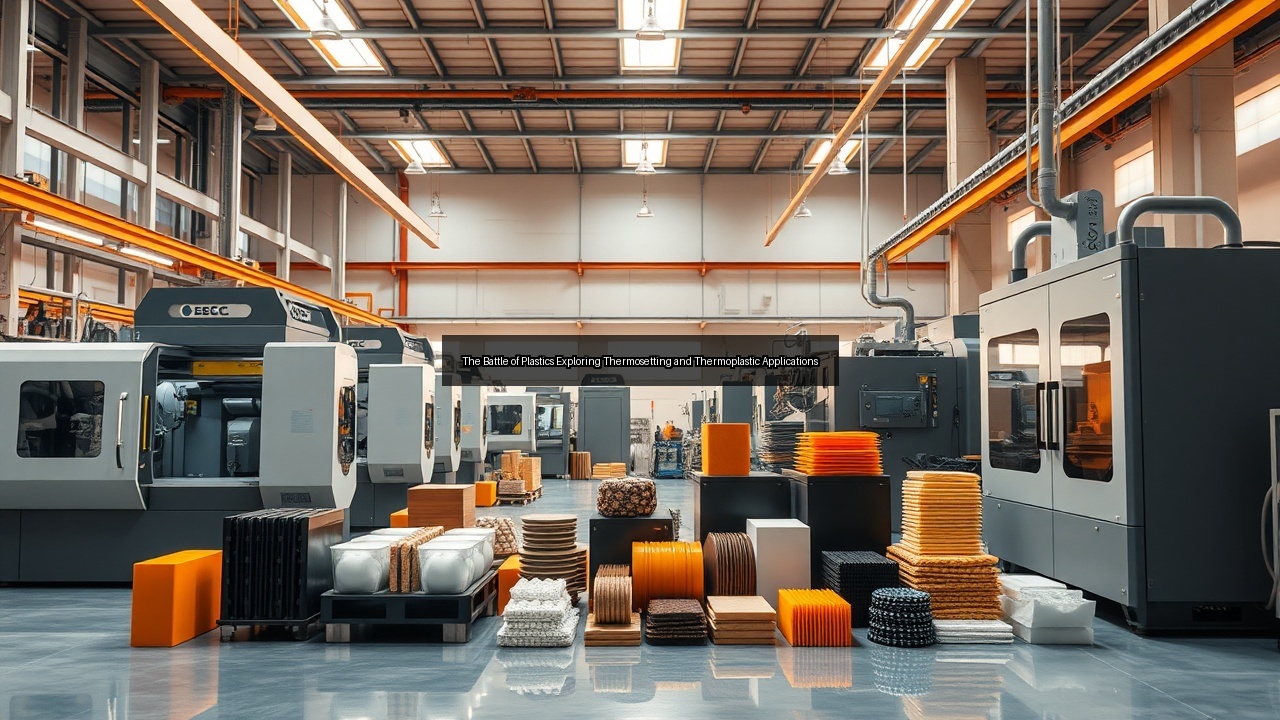
Understanding Thermosetting Plastics and Thermoplastics
Introduction to Thermosetting Plastics
Thermoset plastics form through a chemical reaction that creates permanent cross-links between polymer chains. Once cured, these materials resist melting even under high heat. Manufacturers rely on thermoset plastics for components that face extreme conditions. Epoxy resins and phenolic compounds stand out as common examples in this category. The curing process locks the structure in place, delivering superior dimensional stability. Engineers select thermosetting polymers when parts must maintain integrity near engines or electrical systems. This irreversible bonding distinguishes thermosets from materials that soften repeatedly. Production often involves compression or transfer molding to achieve precise shapes before the reaction completes.
The chemistry behind thermosets typically involves either condensation or addition polymerization reactions that generate covalent cross-links at the molecular level. These cross-links form during the final cure stage, often triggered by heat, catalysts, or ultraviolet light, resulting in a rigid three-dimensional network. Common thermoset families include unsaturated polyesters used in fiberglass composites, melamine-formaldehyde resins valued for their hardness in dinnerware, and polyurethane systems that balance toughness with chemical resistance. Cure cycles may range from minutes at 150–200 °C for epoxies to several hours for thick phenolic sections, and the resulting parts exhibit glass-transition temperatures frequently exceeding 150 °C. Because the network cannot be reversed without degrading the polymer backbone, thermosets provide excellent resistance to creep, solvents, and electrical arcing, making them indispensable for high-voltage bushings, automotive friction materials, and aerospace structural adhesives.
Characteristics of Thermoplastics
Thermoplastics soften when heated and harden when cooled without chemical change. This reversible behavior allows repeated reshaping through melting. Common examples include polyethylene, polypropylene, and nylon. These materials offer excellent impact resistance and chemical tolerance in many environments. Designers favor thermoplastics for parts that require flexibility or easy assembly. The absence of cross-links enables straightforward recycling streams in industrial settings. Thermoplastic polymers flow easily during processing, supporting intricate geometries. Colorants and fillers integrate smoothly into the melt phase. Overall, these resins balance cost with performance across consumer and technical goods.
Thermoplastics are classified by their degree of crystallinity: amorphous grades such as polystyrene and polycarbonate provide optical clarity and uniform shrinkage, while semi-crystalline grades such as polyethylene and polyoxymethylene deliver higher stiffness and fatigue resistance. Molecular weight and polydispersity directly influence melt viscosity and mechanical toughness; higher molecular weights improve impact strength but raise processing temperatures. Additives—including glass fibers for modulus enhancement, flame retardants for UL94 compliance, and impact modifiers for low-temperature ductility—allow tailoring of properties without altering the base polymer. Because chains remain linear or branched, thermoplastics can be welded by ultrasonic, hot-plate, or laser methods and reprocessed multiple times, although each cycle may reduce average molecular weight and therefore performance.
Key Differences Between Thermosets and Thermoplastics
Thermosets and thermoplastics diverge sharply in thermal response and structural behavior. Thermoset plastics retain rigidity after curing while thermoplastics return to a pliable state upon reheating. This distinction drives material selection in every thermosetting vs thermoplastic comparison. Thermosets excel in creep resistance and electrical insulation. Thermoplastics deliver faster cycle times during forming operations. Recyclability favors thermoplastics because they avoid permanent bonding. Strength at elevated temperatures remains higher in thermosetting materials. Engineers weigh these traits against application demands before specifying one family over the other. The choice often determines long-term reliability and processing economics.
Quantitative comparisons highlight these trade-offs. A typical phenolic thermoset retains 70 % of its flexural modulus at 200 °C, whereas unreinforced nylon 6,6 drops below 20 % at the same temperature. Dielectric strength for cured epoxy can exceed 20 kV/mm, outperforming most thermoplastics except specialized fluoropolymers. On the processing side, thermoplastic injection cycles often finish in 15–40 seconds, while thermoset compression cycles may require 90–300 seconds to complete cross-linking. Life-cycle assessments further differentiate the families: thermoplastics achieve closed-loop recycling rates above 90 % in mono-material streams, whereas thermosets are primarily down-cycled into fillers or energy recovery after grinding.
Applications of Thermosetting and Thermoplastic Materials
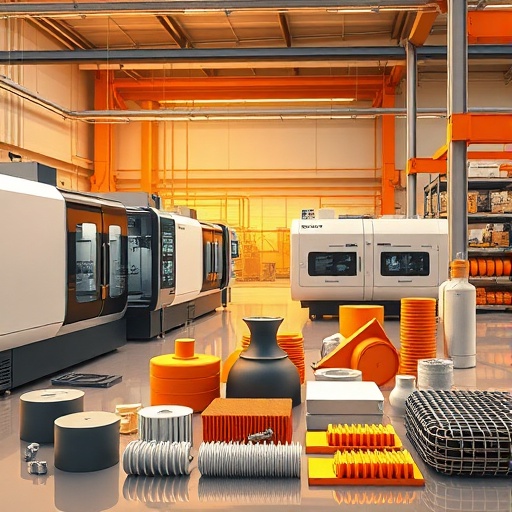
Thermoset Applications in Industrial Manufacturing
Thermoset plastics anchor many industrial applications where heat and pressure dominate. Automotive brake pads and electrical housings use phenolic thermosets for thermal stability. Aerospace composites incorporate epoxy thermosets to reduce weight without sacrificing strength. Chemical processing equipment features these materials in valve seats and pump impellers. The factory environment benefits from thermoset components that withstand solvents and abrasion. Lead times shorten when molds produce durable parts that require minimal finishing. Manufacturers continue expanding thermoset use in high-voltage insulators and heavy machinery seals.
Beyond these classic uses, thermosets appear in oil-field downhole tools rated to 250 °C, wind-turbine blade roots that must survive 20-year fatigue spectra, and high-reliability printed-circuit boards for 5G infrastructure. Phenolic molding compounds filled with glass or mineral fibers routinely achieve heat-deflection temperatures above 250 °C while maintaining arc resistance greater than 180 seconds. Epoxy systems dominate carbon-fiber prepregs for primary aircraft structures because interlaminar shear strength remains high after 5000 hours of hot-wet conditioning.
Versatile Uses of Thermoplastics
Thermoplastics appear in packaging, automotive interiors, and medical devices. Polypropylene crates stack reliably in warehouses thanks to impact toughness. Medical tubing and housings rely on polycarbonate for clarity and sterilization compatibility. Consumer electronics cases gain lightweight durability from ABS thermoplastics. These resins adapt to blow molding, extrusion, and thermoforming with equal ease. Recycled thermoplastic streams feed new production runs, lowering raw material demand. Designers exploit the weldability of thermoplastics to create complex assemblies without fasteners.
Additional high-performance applications include polyetheretherketone (PEEK) spinal implants that withstand repeated autoclave cycles, thermoplastic polyurethane films for architectural membranes requiring 25-year weatherability, and long-fiber-reinforced polypropylene front-end modules that replace stamped steel at 40 % weight savings. In consumer goods, clarified polypropylene enables thin-wall, microwave-safe food containers with excellent hinge durability, while metallocene-catalyzed polyethylene grades deliver downgauged films without sacrificing dart impact strength.
Role of Thermoplastic Polymers in PCB Design
Thermoplastic polymers support certain PCB design elements despite thermoset dominance in substrates. Flexible circuits often employ polyimide films that withstand repeated bending. Connectors molded from nylon thermoplastics provide reliable pin retention. Overmolding operations protect solder joints with thermoplastic jackets. Engineers integrate these materials where vibration damping or ease of assembly matters. PCB design teams evaluate dielectric properties alongside processing speed when mixing resin types. Thermoplastic options reduce weight in portable electronics while maintaining signal integrity.
Liquid-crystal polymer (LCP) and polyphenylene sulfide (PPS) connectors molded directly onto rigid boards allow high-density, lead-free reflow soldering at 260 °C while preserving pin coplanarity. Thermoplastic elastomers overmolded onto rigid-flex assemblies absorb shock and improve drop-test survival rates in handheld devices. Emerging low-loss thermoplastic substrates based on modified polyphenylenes are now under evaluation for 77 GHz automotive radar modules, offering dielectric constants stable within ±0.02 across temperature and humidity excursions.
Manufacturing Processes: Thermosetting vs Thermoplastic
Injection Moulding Techniques for Thermoplastics
Injection moulding dominates thermoplastic production because of speed and repeatability. Molten resin fills precision molds under high pressure before rapid cooling. Thermoplastic injection molding supports high-volume runs of housings, gears, and enclosures. Cycle times often fall below thirty seconds per part. Multi-cavity tools multiply output without extra labor. Process controls maintain consistent wall thickness and surface finish. Automation integrates seamlessly with injection moulding lines in modern factories. Material drying precedes each run to prevent defects from moisture.
Modern electric and hybrid machines achieve shot-to-shot repeatability within 0.5 % by closed-loop control of screw position and cavity pressure. Gas-assisted and water-assisted variants reduce sink marks and cycle times for thick sections. In-mold labeling and in-mold decoration integrate graphics during the same shot, eliminating secondary operations. Real-time cavity-pressure sensors combined with artificial-intelligence algorithms now predict and correct viscosity fluctuations caused by regrind content or lot-to-lot resin variation.
CNC Machine Applications for Thermosets
A CNC machine delivers tight tolerances on cured thermoset blanks. Operators machine intricate features into phenolic or epoxy stock after initial forming. This approach suits low-volume or prototype work where molds prove impractical. Surface finishes improve through carbide tooling and controlled feeds. Thermoset parts retain stability during cutting because cross-links resist deformation. Coolant selection prevents thermal damage to the material. Shops program CNC machine paths to minimize tool wear on abrasive fillers.
High-speed machining centers equipped with 40 000 rpm spindles and diamond-coated end mills routinely achieve ±0.025 mm tolerances on glass-filled epoxy laminates. Vacuum fixturing prevents delamination while through-tool coolant at 70 bar evacuates abrasive dust that would otherwise accelerate wear. Post-machining ultrasonic cleaning removes sub-micron filler particles that could compromise electrical insulation performance in finished components.
CNC Milling and its Relevance in Thermosetting Materials
CNC milling refines thermosetting materials into final geometries after curing. Five-axis machines reach undercuts and compound angles in a single setup. Epoxy tooling boards receive CNC milling to create patterns for composite layups. Dimensional accuracy stays high because thermosets exhibit negligible springback. Fixture design accounts for the brittle nature of some thermoset grades. Post-milling deburring removes sharp edges without compromising part function. This process complements molding when secondary features become necessary.
Adaptive tool-path strategies generated from digital twins of the cured blank reduce air-cutting time and extend tool life by 30 %. For large aerospace patterns, five-axis gantry mills equipped with probing systems compensate for any cure-induced distortion, maintaining surface profiles within 0.1 mm over 3 m spans. Cryogenic cooling with liquid nitrogen is occasionally applied to phenolic grades to suppress microcracking during heavy roughing operations.
Advantages and Disadvantages of Each Type
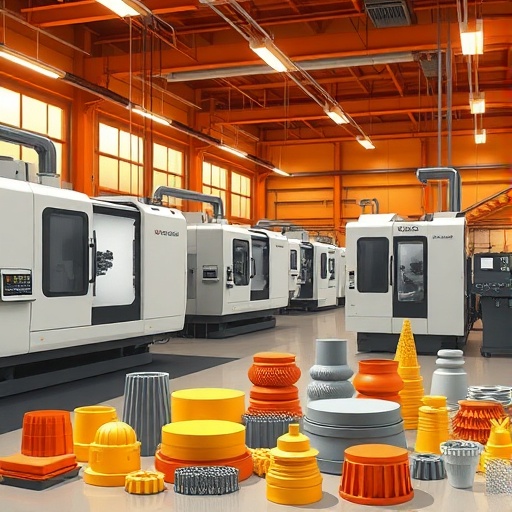
Benefits of Thermosetting Plastics
Thermosetting plastics deliver unmatched heat resistance and structural rigidity. Parts maintain shape under continuous loads at temperatures exceeding 200 °C. Chemical resistance protects components in harsh processing environments. Electrical insulation properties remain stable across wide frequency ranges. Long-term creep performance exceeds that of most thermoplastics. These traits justify thermoset selection in safety-critical applications. Reduced flammability further enhances their appeal in transportation and construction.
In addition, many thermosets exhibit low coefficients of thermal expansion (as low as 12 ppm/°C when heavily mineral-filled), enabling metal replacement in precision gears and valve bodies. Their inherent flame retardancy often meets UL94 V-0 without halogenated additives, simplifying regulatory compliance for mass-transit interiors.
Limitations of Thermoplastic Materials
Thermoplastic materials soften at comparatively low temperatures, limiting service conditions. Creep under sustained load can distort precision components over time. Some grades absorb moisture that alters mechanical properties. Recycling streams require careful sorting to preserve performance. Impact strength drops sharply in cold environments for certain resins. These constraints force designers to specify reinforcements or alternative materials in demanding roles.
Moisture absorption in nylons can reach 8 % at saturation, lowering glass-transition temperature by 30 °C and reducing modulus by half. Notch sensitivity in polycarbonate at sub-zero temperatures necessitates careful part design or elastomer modification. Sorting mixed post-consumer streams remains costly, limiting the economic viability of high-performance recycled grades.
Cost Considerations in Material Selection
Material cost, tooling investment, and cycle time drive selection between thermosets and thermoplastics. Thermoset molding often requires longer cure cycles that raise per-part expense. Thermoplastic injection moulding spreads tooling costs across high volumes effectively. Scrap from thermoplastics reenters the process easily, trimming waste expenses. Thermosets generate less recyclable scrap, increasing disposal costs. Lead times for thermoset tooling frequently exceed those for thermoplastic molds. Total ownership cost calculations ultimately favor one family depending on volume and performance needs.
Typical epoxy compression molds cost 25–40 % more than equivalent steel injection molds because of higher cavity pressures and longer cure times. However, when annual volumes exceed 500 000 parts, thermoplastic tooling amortization drops below 0.02 € per part, while thermoset economics remain attractive only when heat or chemical resistance justifies the premium. Scrap-rate penalties for thermosets can add 8–12 % to unit cost unless near-net-shape blanks are used.
Future Trends in Plastic Materials
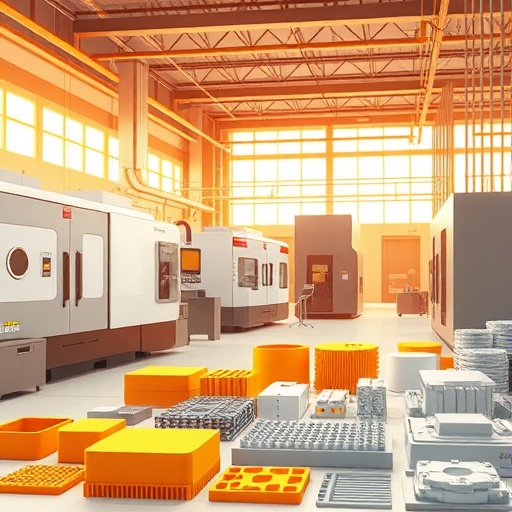
Innovations in Thermosetting Polymers
New thermosetting polymers incorporate bio-based feedstocks while preserving classic performance. Fast-cure systems shorten production cycles without sacrificing cross-link density. Self-healing additives extend service life in structural composites. Researchers develop thermosets compatible with additive manufacturing platforms. These advances expand thermoset reach into medical implants and renewable energy hardware. Performance gains continue to outpace incremental improvements in competing materials.
Recent bio-epoxy resins derived from lignin and cashew nutshell liquid match petroleum-based counterparts in glass-transition temperature while reducing cradle-to-gate carbon footprint by 35 %. Vitrimers—thermosets containing dynamic covalent bonds—offer reprocessability at elevated temperatures without loss of network integrity, opening routes to recyclable wind-turbine blades and automotive body panels.
Sustainability in Thermoplastic Development
Thermoplastic development emphasizes closed-loop recycling and reduced fossil content. Mono-material designs simplify end-of-life sorting in packaging streams. Bio-derived resins match mechanical properties of petroleum versions at competitive prices. Chemical recycling breaks thermoplastics back to monomers for virgin-grade output. Manufacturers track carbon footprints through supply chains to meet regulatory targets. These efforts position thermoplastics as frontrunners in circular economy models.
Enzymatic depolymerization of PET now achieves 95 % monomer recovery at pilot scale, while advanced sorting with near-infrared and AI vision systems reaches 98 % purity for mixed polyolefin streams. Drop-in bio-polypropylene from sugarcane and bio-polyethylene from tall oil already supply commercial packaging grades with identical processing windows to fossil equivalents.
The Impact of Manufacturing Technology on Plastic Applications
Advanced manufacturing technology reshapes how both thermosets and thermoplastics reach end users. Hybrid processes combine injection moulding with CNC milling for hybrid parts. Digital twins optimize mold flow and cure cycles before steel is cut. Automation reduces labor variability across factory floors. Real-time sensors adjust parameters to maintain quality during material changes. These tools accelerate iteration and lower barriers for new applications in both resin families.
Digital-thread platforms now link material characterization data directly to process-parameter generation, cutting development cycles for new medical-grade PEEK implants from 18 months to under 6 months. Robotic filament winding of large epoxy composite structures incorporates in-line ultrasonic inspection, enabling 100 % traceability from towpreg lot to finished wind-turbine spar cap.